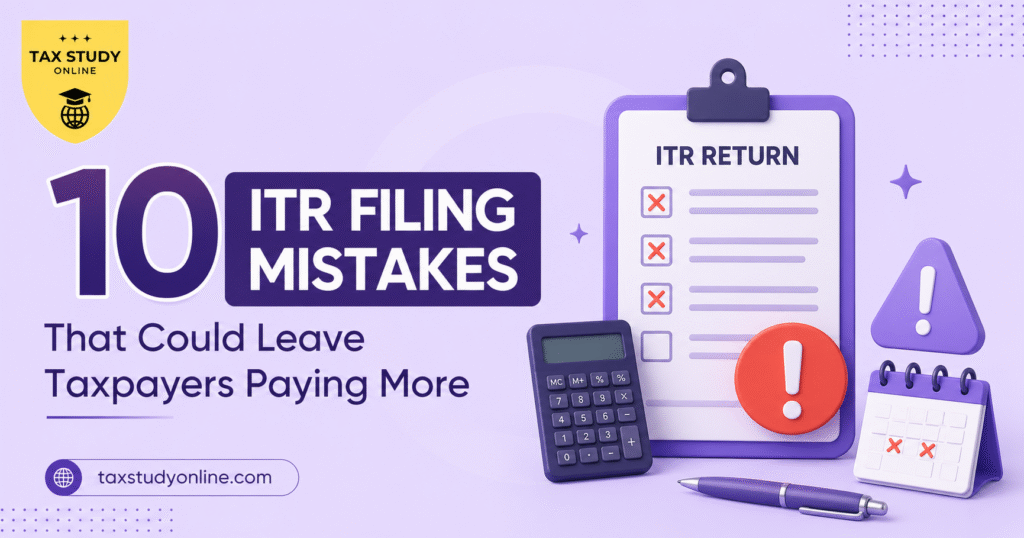
Filing Income Tax Returns (ITR) may seem like a routine task, but even small mistakes can result in higher tax payments, delayed refunds, penalties, or notices from the Income Tax Department. With the tax system becoming more data-driven and automated, taxpayers are expected to report income and tax details accurately.
Here are 10 common ITR filing mistakes that could end up costing taxpayers more money.
1. Choosing the Wrong ITR Form
One of the most common mistakes taxpayers make is selecting the wrong ITR form while filing returns. Different forms apply to different types of taxpayers based on income sources and eligibility.
Using the incorrect form can lead to defective return notices and delays in processing.
Taxpayers should carefully check which ITR form applies to their income category before filing.
2. Not Reporting All Sources of Income
Many individuals report only salary income and forget to include:
- Interest from savings accounts and fixed deposits
- Rental income
- Freelance or side income
- Dividend income
- Capital gains from shares or mutual funds
The Income Tax Department now tracks financial transactions through multiple sources, making it easier to identify mismatches.
Failing to disclose complete income may lead to additional tax demand or notices.
3. Ignoring Form 168 and AIS
Before filing returns, taxpayers should always review:
- Form 168
- Annual Information Statement (AIS)
These documents contain records of TDS, tax payments, interest income, and high-value transactions.
If the details mentioned in the ITR do not match these records, the return may face scrutiny or refund delays.
4. Filing Under the Wrong Tax Regime
Many taxpayers select a tax regime without comparing which option is more beneficial for them.
Choosing the wrong regime can increase overall tax liability. Taxpayers should calculate taxes under both available regimes before filing returns.
A simple comparison can help avoid paying extra tax unnecessarily.
5. Incorrect Personal or Bank Details
Mistakes in PAN, Aadhaar, bank account number, or IFSC code can create issues in return processing and refund transfers.
Even minor spelling errors may delay refunds or require correction requests later.
Taxpayers should carefully verify all personal and banking details before submission.
6. Claiming Incorrect TDS Credits
Some taxpayers claim TDS credits that are either missing or incorrectly reported in Form 26AS.
This usually happens when:
- Employers enter incorrect PAN details
- Banks fail to update TDS records
- Tax deductions are not deposited properly
Incorrect TDS claims can trigger tax notices and additional tax demands.
7. Delaying ITR Filing Until the Last Date
Waiting until the last moment to file returns often leads to:
- Data entry mistakes
- Missing documents
- Technical issues on the portal
- Incorrect calculations
Late filing may also attract penalties and interest on unpaid taxes.
Starting the filing process early gives taxpayers enough time to review all details properly.
8. Forgetting to Verify the Return
Many taxpayers file the return successfully but forget to complete e-verification.
Without verification, the ITR is considered invalid by the Income Tax Department.
Taxpayers should complete verification immediately using Aadhaar OTP, net banking, or other available methods.
9. Not Reporting Capital Gains Properly
Income from:
- Stocks
- Mutual funds
- Property sales
- Cryptocurrency transactions
must be reported correctly while filing returns.
Many taxpayers either ignore these transactions or calculate gains incorrectly, which may result in notices or additional tax liability later.
10. Failing to Review the Return Before Submission
Small mistakes such as incorrect figures, mismatched income details, or duplicate entries can create major problems after filing.
A final review before submission helps taxpayers identify errors and avoid future complications.
Double-checking all details can save both money and unnecessary stress.
Final Thoughts
ITR filing is not just about submitting a form before the deadline. Accurate reporting, proper verification, and careful review are essential to avoid paying more tax than required.
With the Income Tax Department using advanced data-matching systems, taxpayers should ensure that every detail in their return matches official records.
Avoiding these common ITR filing mistakes can help taxpayers reduce compliance issues, receive faster refunds, and prevent unnecessary financial burden.